Enterprise Spend Request Experience

- ROLE
- Digital Media
Specialist - TIMELINE
- May - Aug
2025 - TEAM
- Supply Chain
Management - SKILLS
- Product/Motion/
Visual Design
OVERVIEW
Submitting a spend request shouldn’t feel like sending something into a void.
Before SourcePoint, FIS's spend request process relied on Microsoft Forms and several disconnected systems.
For employees, that meant submitting a request without knowing where it went, who was reviewing it, or who to contact when something was missing. Requests could sit unresolved for months, and sometimes years.

SOLUTION
SourcePoint brought everything into one place.
The Supply Chain Management team built SourcePoint to centralize sourcing, contracting, spend requests, and software approvals into a single hub.
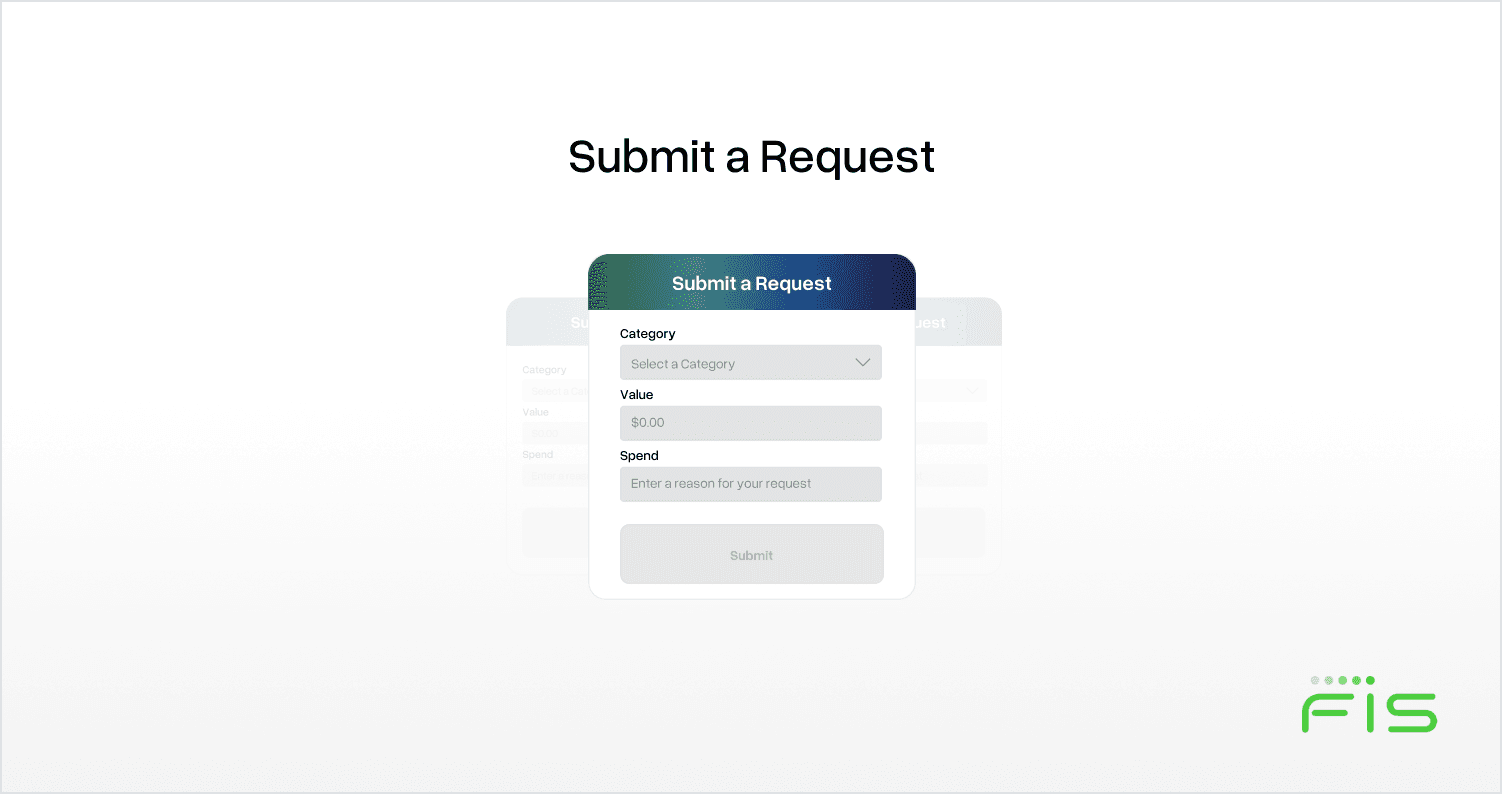
Users could now: submit a request, track its progress and connect with a reviewer all from one place.
CHALLENGE
How do you introduce a complex enterprise product to 50,000+ employees?
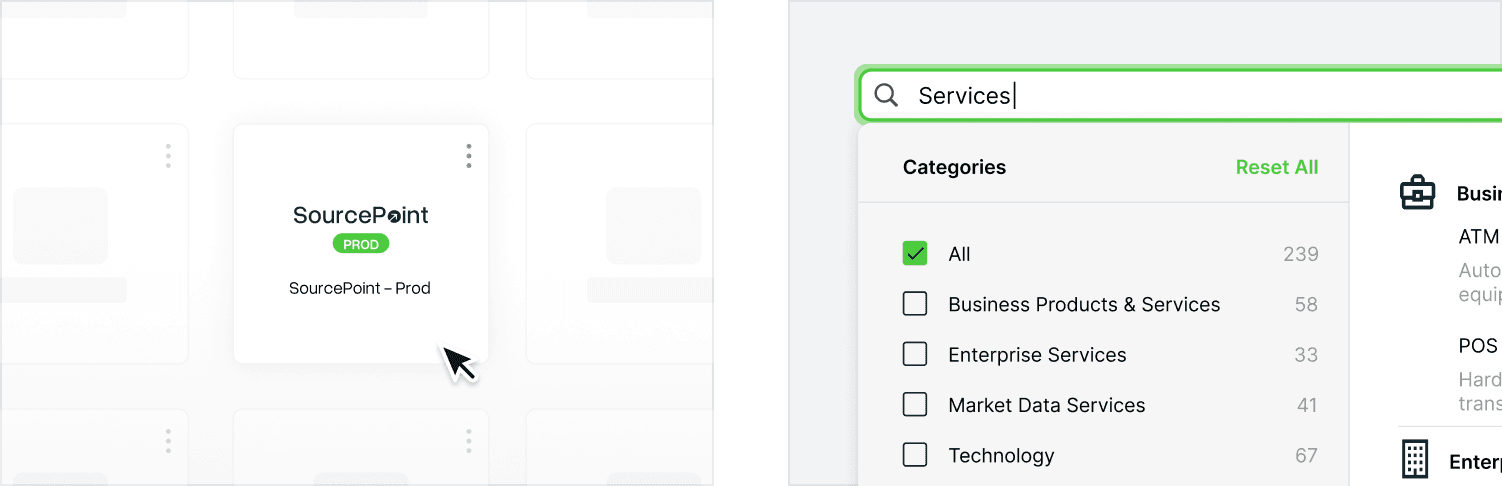
SourcePoint wasn't just a new interface. It represented a completely different way of navigating procurement at FIS. People needed to understand why the platform existed, what had changed, and how to use it, before they could adopt it. I was brought in to create the product launch video that would introduce SourcePoint across FIS. I also designed the SourcePoint logo and contributed directly to the product by redesigning its spend-category selection experience.

The launch eventually led to an opportunity to establish a Digital Media Studio initiative, creating product, process, and feature explainers for teams across Supply Chain.
First, I had to understand the product.
Before deciding what to show, I broke down the experience into three parts: what SourcePoint solved, what had changed from the old process, and which parts of the product mattered most to a new user.
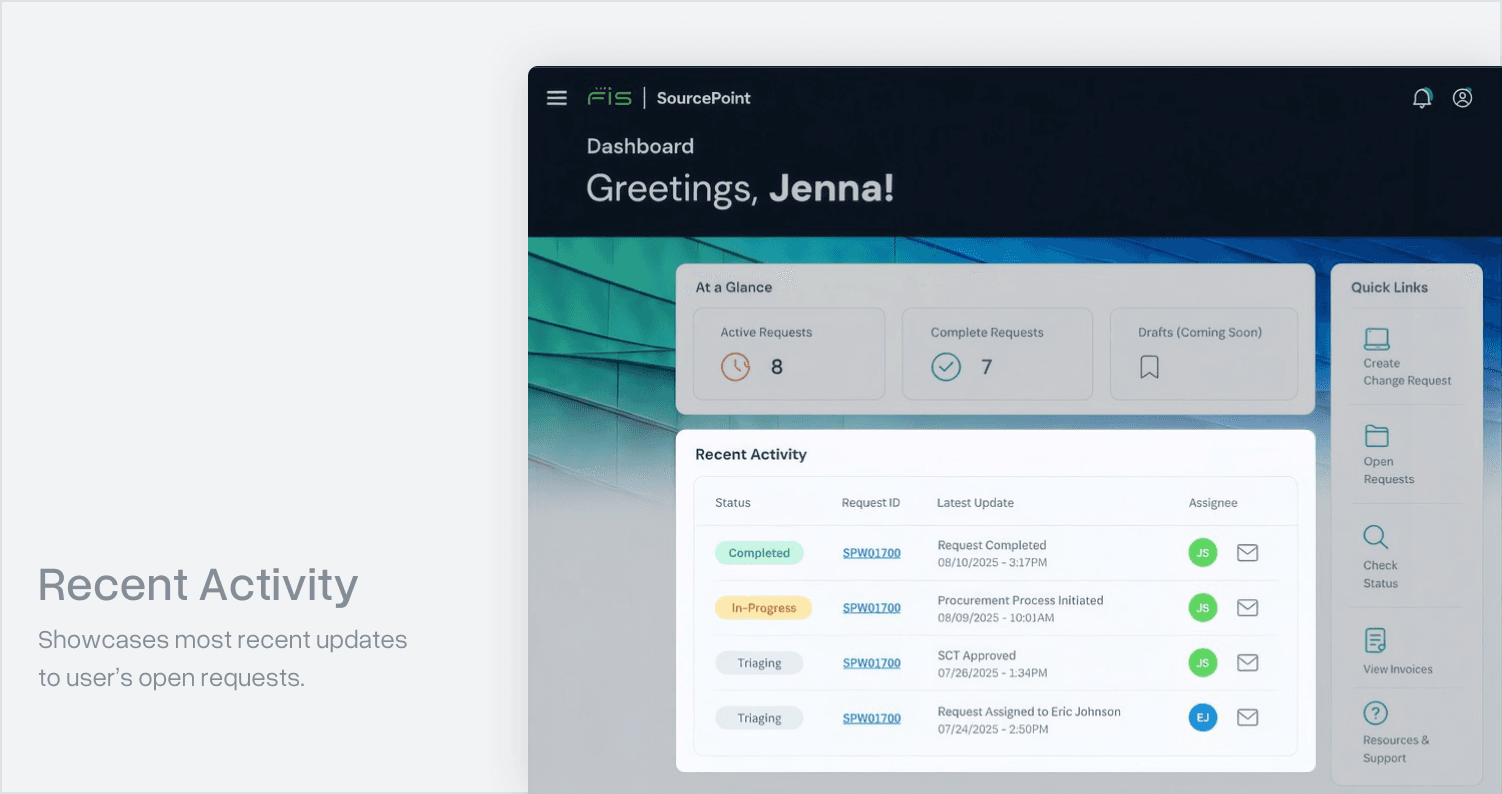
The walkthrough focused on the parts of SourcePoint that directly addressed the challenges from the old experience:
I also contributed directly to the SourcePoint UI.
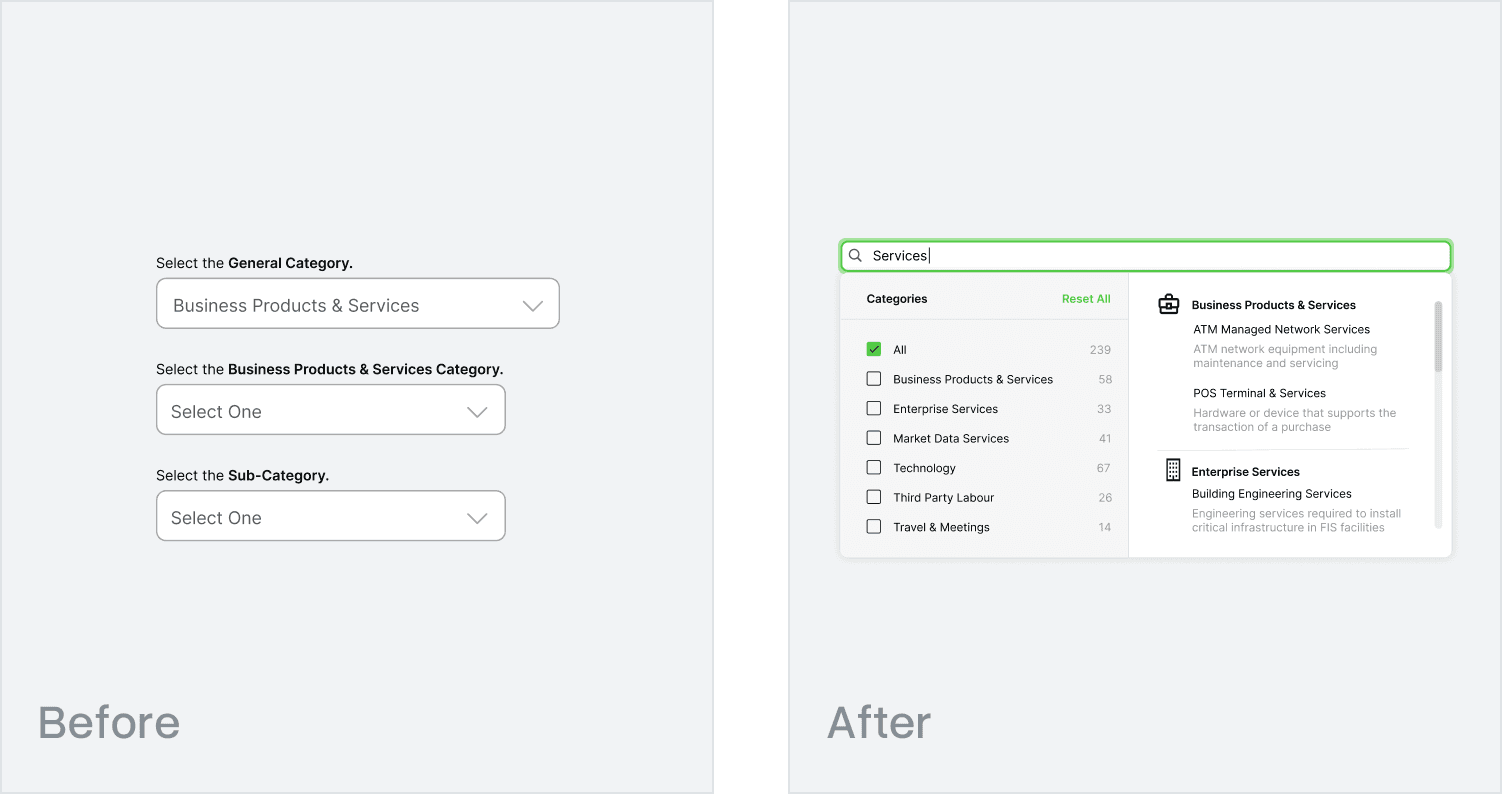
The original spend request form asked users to navigate a hierarchy of categories and subcategories. The system needed that information to determine who should review the request, but the categorization wasn't necessarily intuitive to the person submitting it.
I redesigned the experience around a single search interaction, allowing users to find the appropriate category without having to understand how the options were organized.
In its first month, SourcePoint achieved:
- 90%
- ADOPTION
- 2,300+
- REQUESTS
- $500M+
- IN SPEND
- 50,000+
- AUDIENCE
KEY TAKEAWAY
Good product communication starts with understanding the problem.
The most important part of creating the SourcePoint launch video wasn't the animations. It was figuring out what people actually needed to understand.
A complex enterprise product can have dozens of features, workflows, and integrations. The launch experience became much clearer once I focused on understanding the problem, how SourcePoint can address it, and the impact it can have on FIS employees.
NEXT PROJECT
AI Policy Research Assistant


Digital Consumer ... Act, 2026
Find any complex language in this legislation |

