AI Policy Research Assistant
- ROLE
- Usability Testing
& Strategy - TIMELINE
- May - Aug
2026 - TEAM
- Experience (XD)
Design Studio - SKILLS
- User Interviews
Synthesis
OVERVIEW
An AI research assistant for reducing red tape.
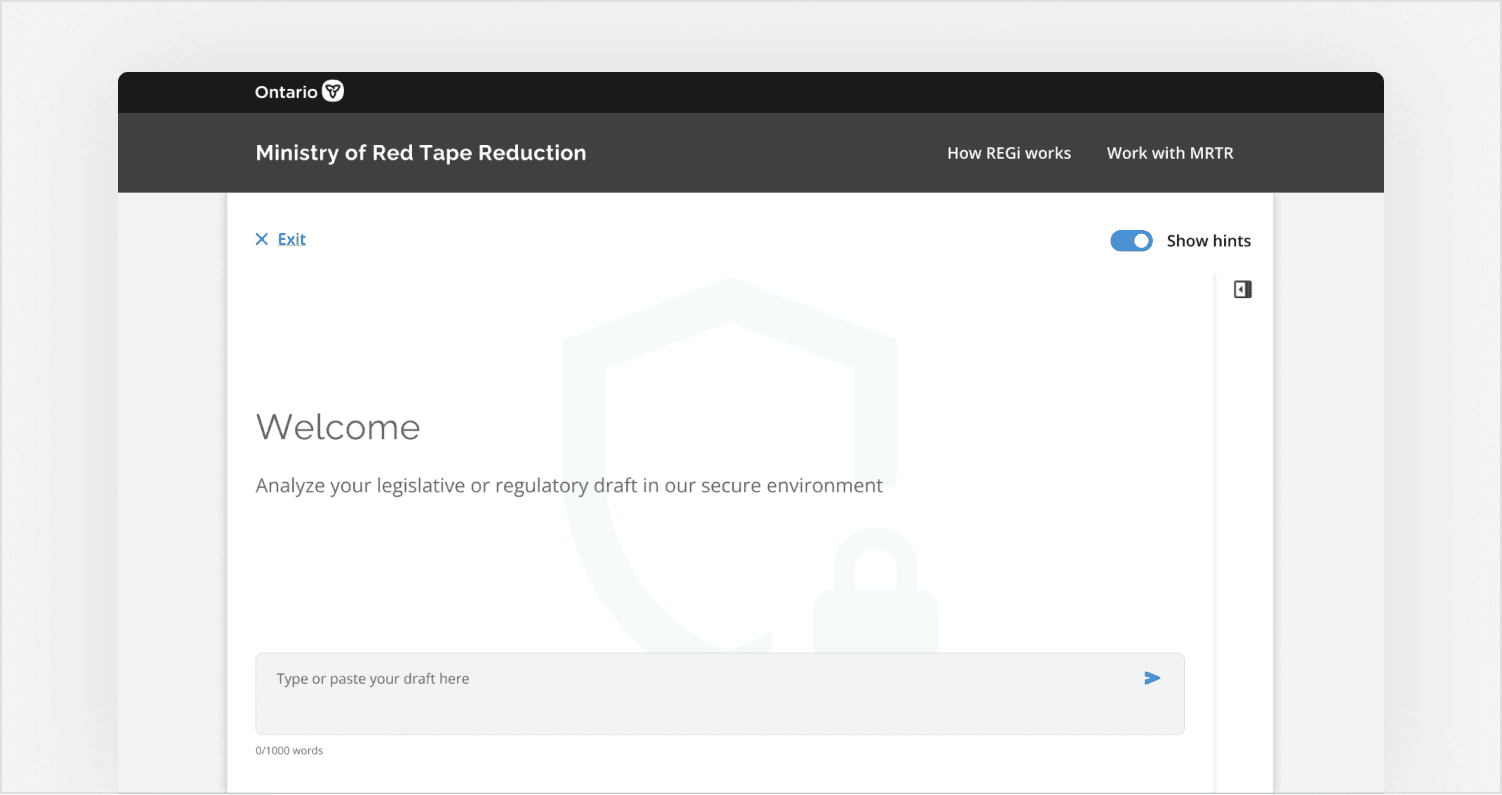
REGi helps Ontario policy advisors identify regulatory compliance requirements across legislation and regulations, making it easier to find opportunities to reduce administrative burden.
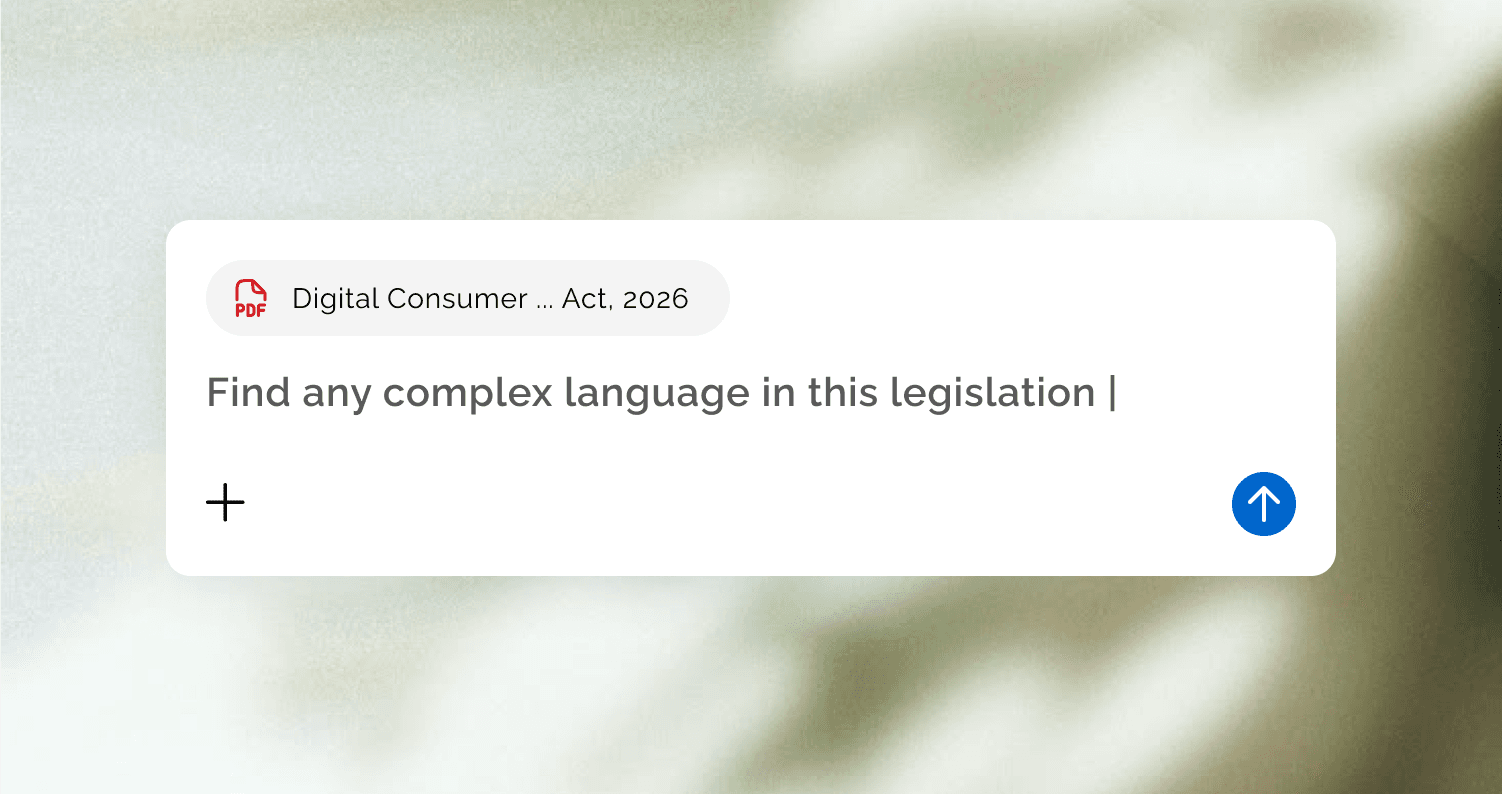
But finding outdated/complex language wasn’t enough.
Policy advisors don't just need to identify technical terms. They need to understand where regulations create unnecessary burden, friction, or ambiguity, and how those issues could be addressed.
RESEARCH
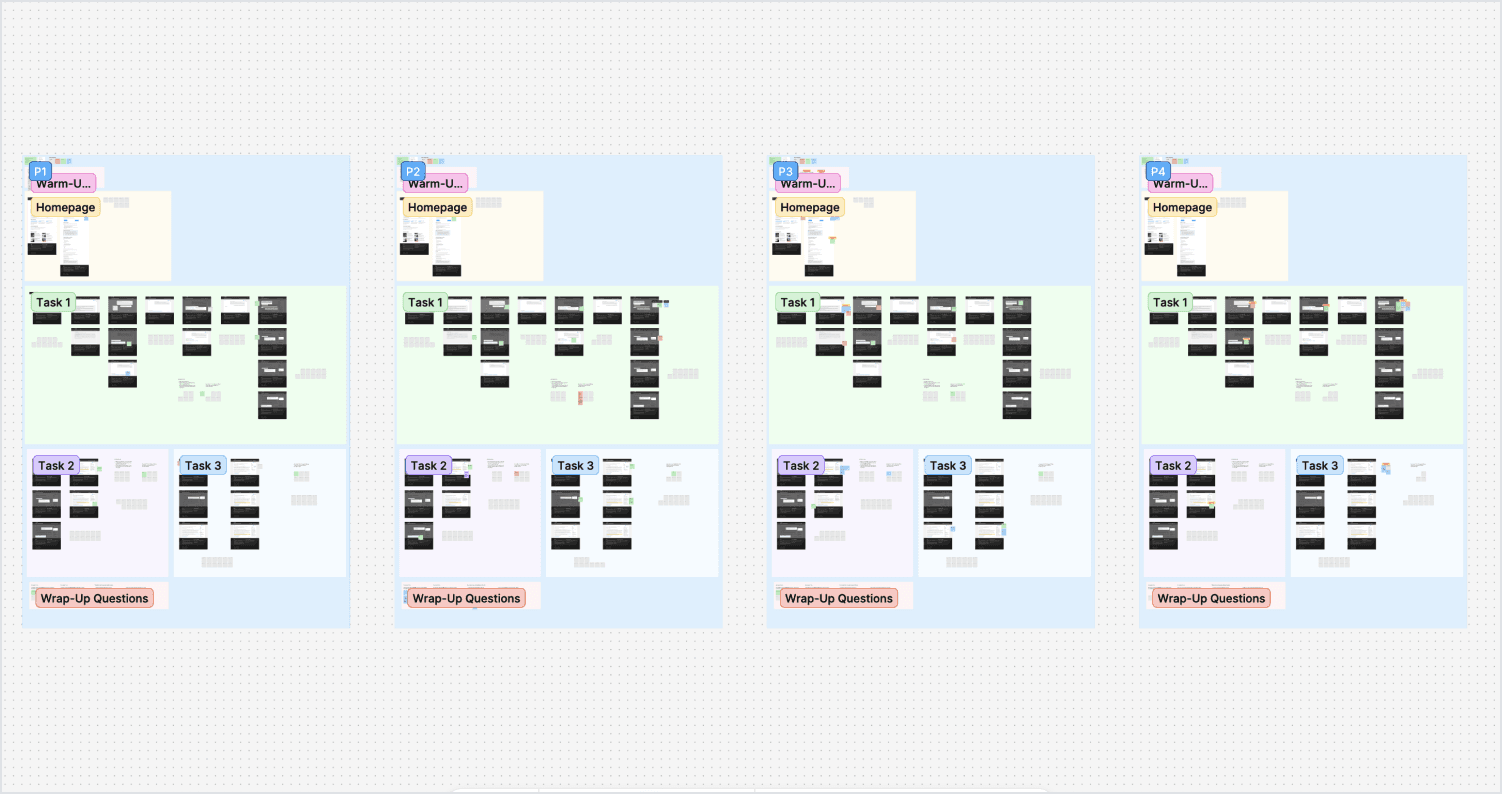
We tested REGi with 10–15 policy advisors.
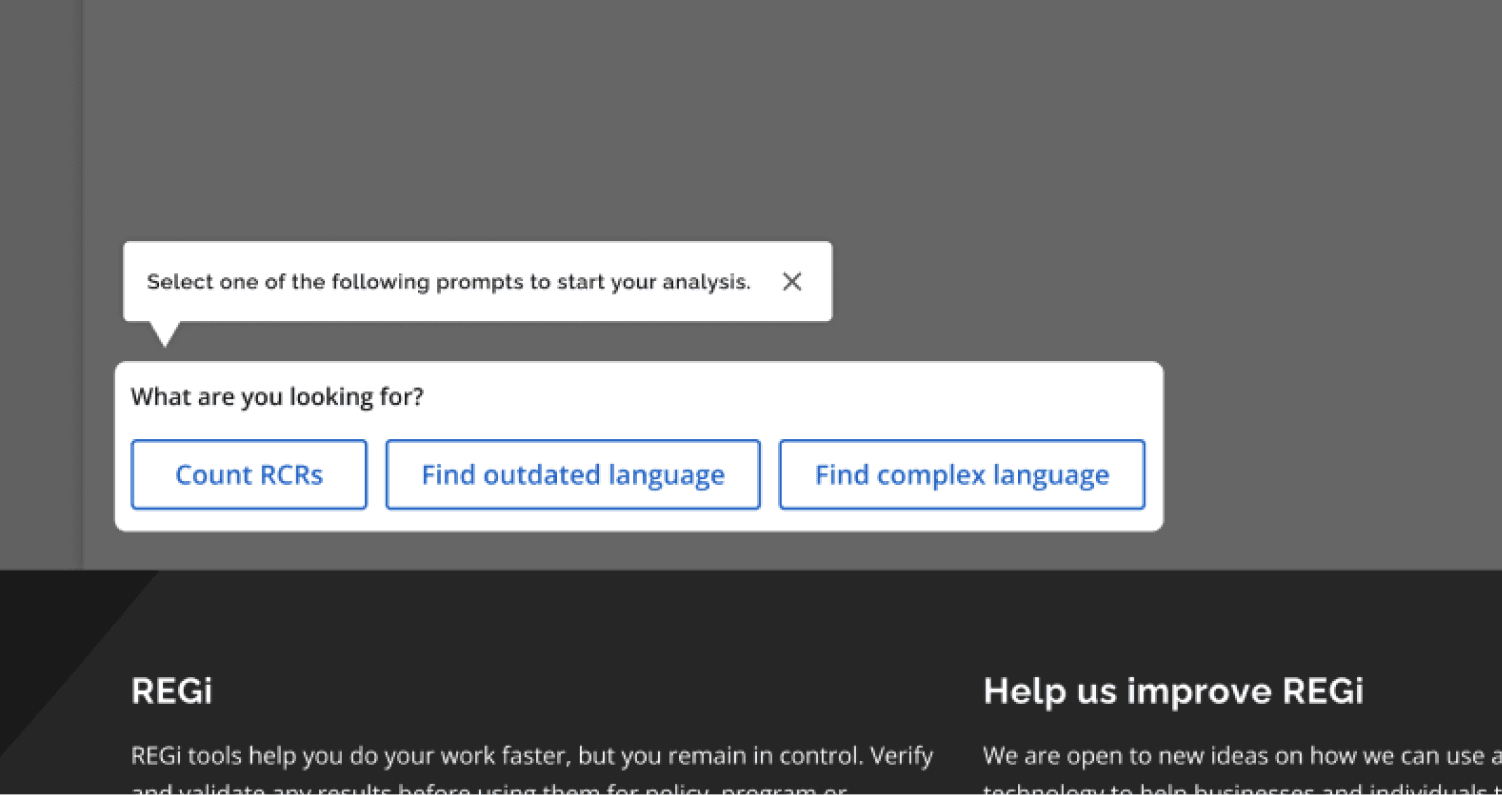
Participants explored the platform, followed a guided tour, and tried prompting the AI to produce useful results.
The biggest surprise? REGi was looking for the wrong things.
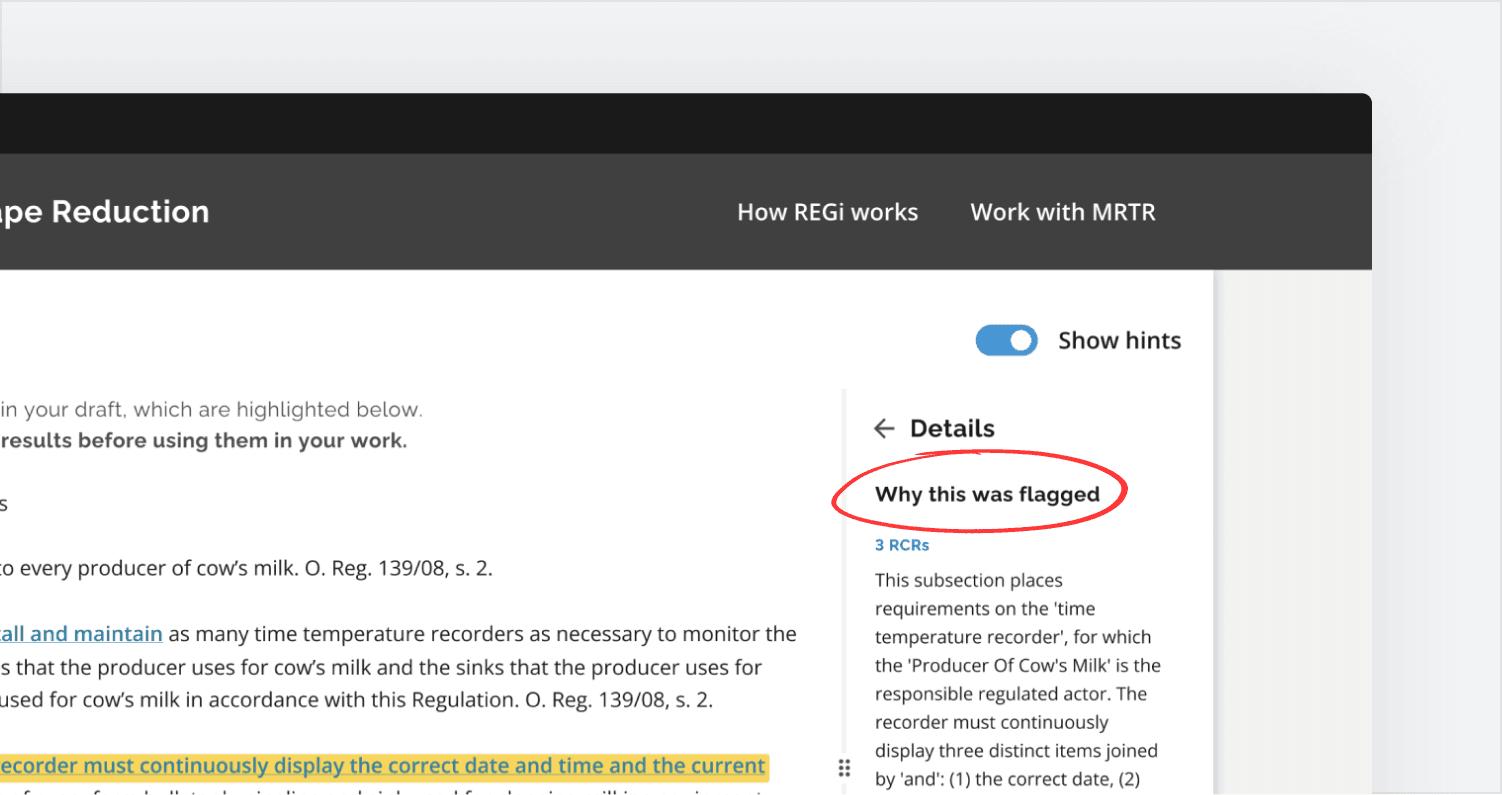
REGi could identify technical and complex language, but that wasn't necessarily the information policy advisors needed to propose meaningful legislative amendments.
user INSIGHT 1
Finding complexity isn't the same as finding burden.
The existing prompts were too generic to guide the AI towards issues like administrative burden, regulatory friction, and ambiguity.
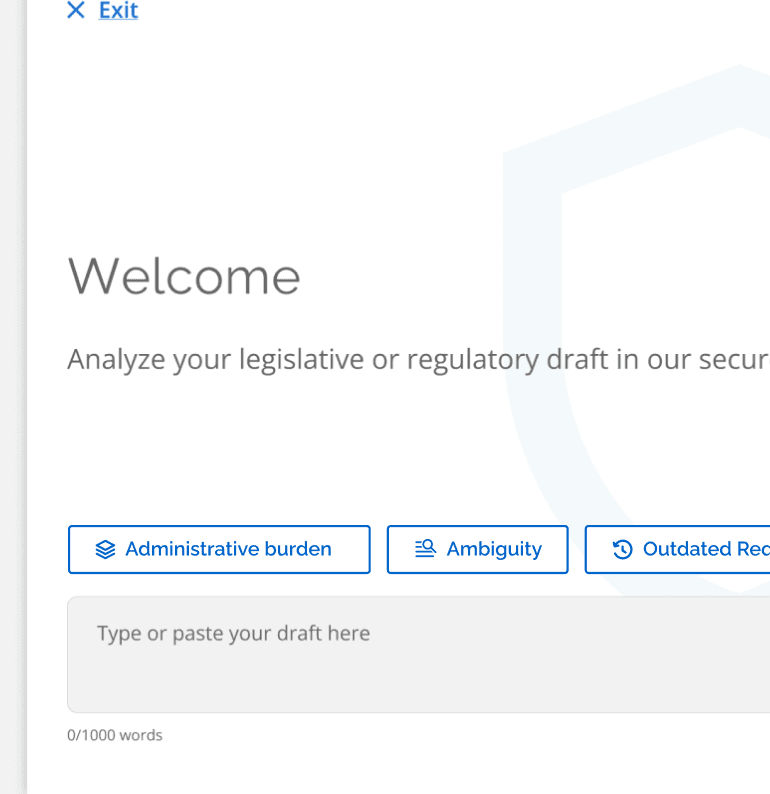
Opportunity
Give advisors more meaningful ways to direct the analysis.
user INSIGHT 2
Results need to fit the way advisors work.
Policy advisors work with legislative text stored in formatted Word documents. Without file attachments, the results felt disconnected.
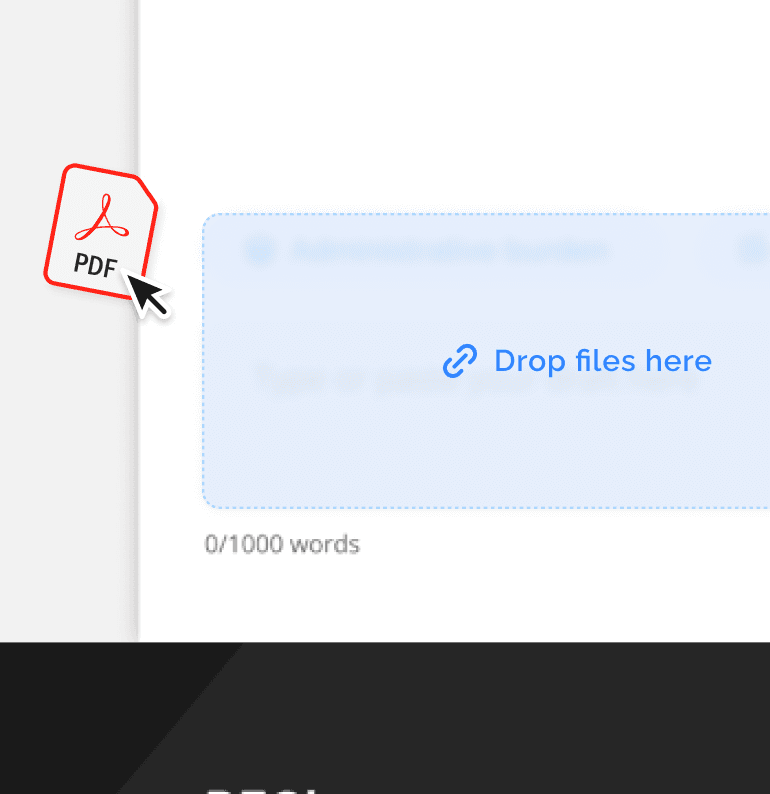
Opportunity
Bring document upload, suggested wording, and export into the experience.
user INSIGHT 3
Identifying an issue wasn't all advisors needed to do.
Advisors needed more than a potentially problematic passage. They needed to consider alternative wording and move amendments forward.
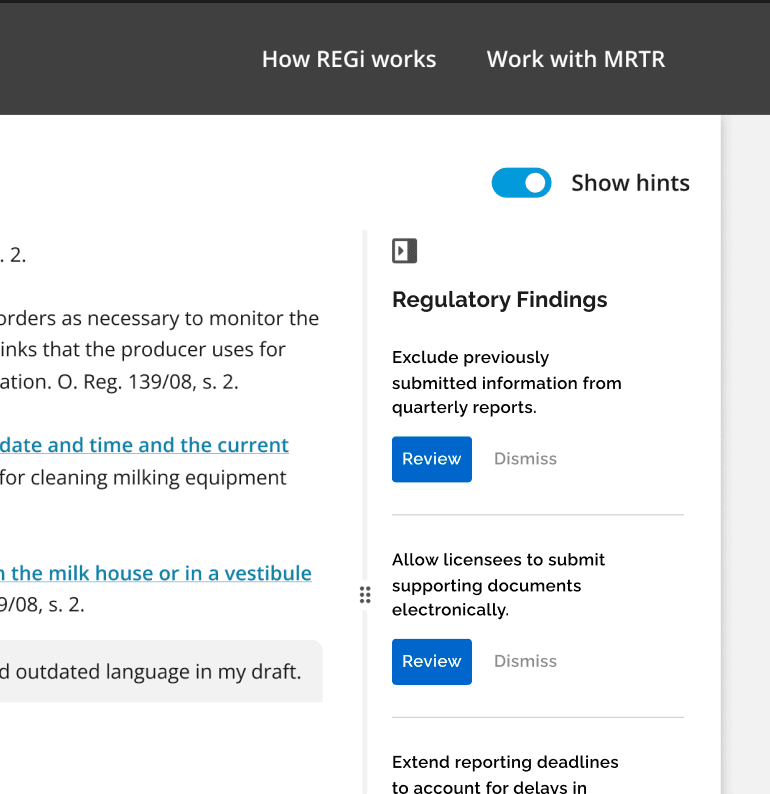
Opportunity
Connect analysis to reviewable legislative edits.
user INSIGHT 4
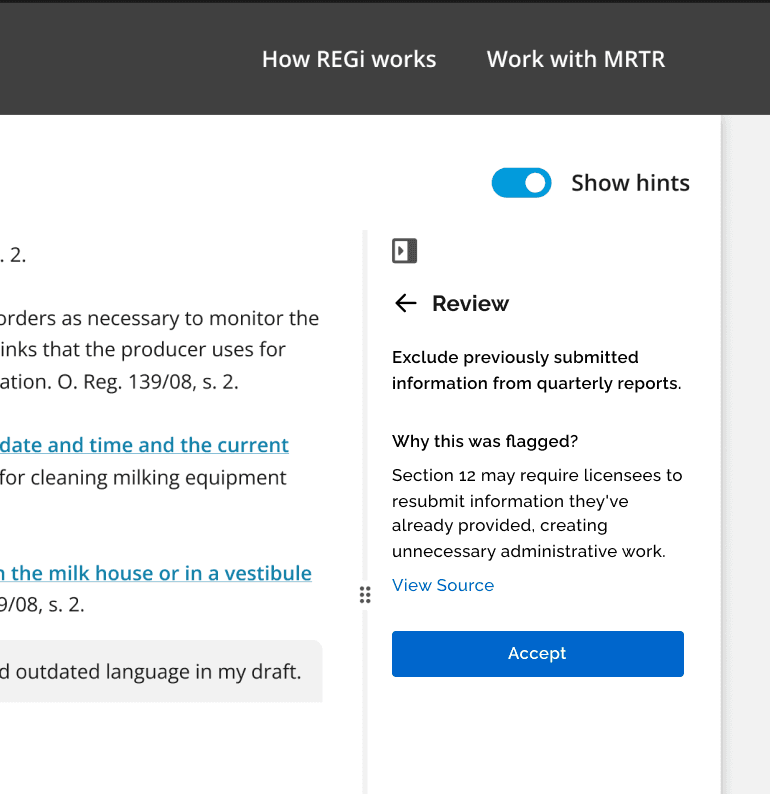
AI generated results need to be verifiable.
The AI disclaimer raised questions about how much of the output users would need to double-check.
Opportunity
Make sources and supporting evidence easier to inspect.
REGi’s impact:
- 95%
- ACCURACY
- 1,540
- USERS
- $1.4M
- COST AVOIDED
- $35M
- est. savings
KEY TAKEAWAY
A product only works if it solves the right problem.
It's easy to believe you've designed something useful when you understand the problem from your own perspective. But usability testing showed me how different that perspective can be from the people actually doing the work.
There's always more to learn from users. Testing helps us challenge our assumptions, understand their needs more deeply, and validate whether what we've designed is genuinely useful.
NEXT PROJECT
Executive KPI Analytics Dashboard

Optics