Service Design & Mapping
- ROLE
- UX Research &
Service Design - TIMELINE
- May - Aug
2026 - TEAM
- Experience (XD)
Design Studio - SKILLS
- Service Blueprints
Workshop Facilitation
OVERVIEW
Streamlining document processing across Ontario’s official document services.
Official Documents Services (ODS) helps Ontarians authenticate public documents for international use, obtain notary public appointments, and access other official government document services.
Behind these services, staff navigate complex processes involving multiple systems, paper records, spreadsheets, and manual handoffs.
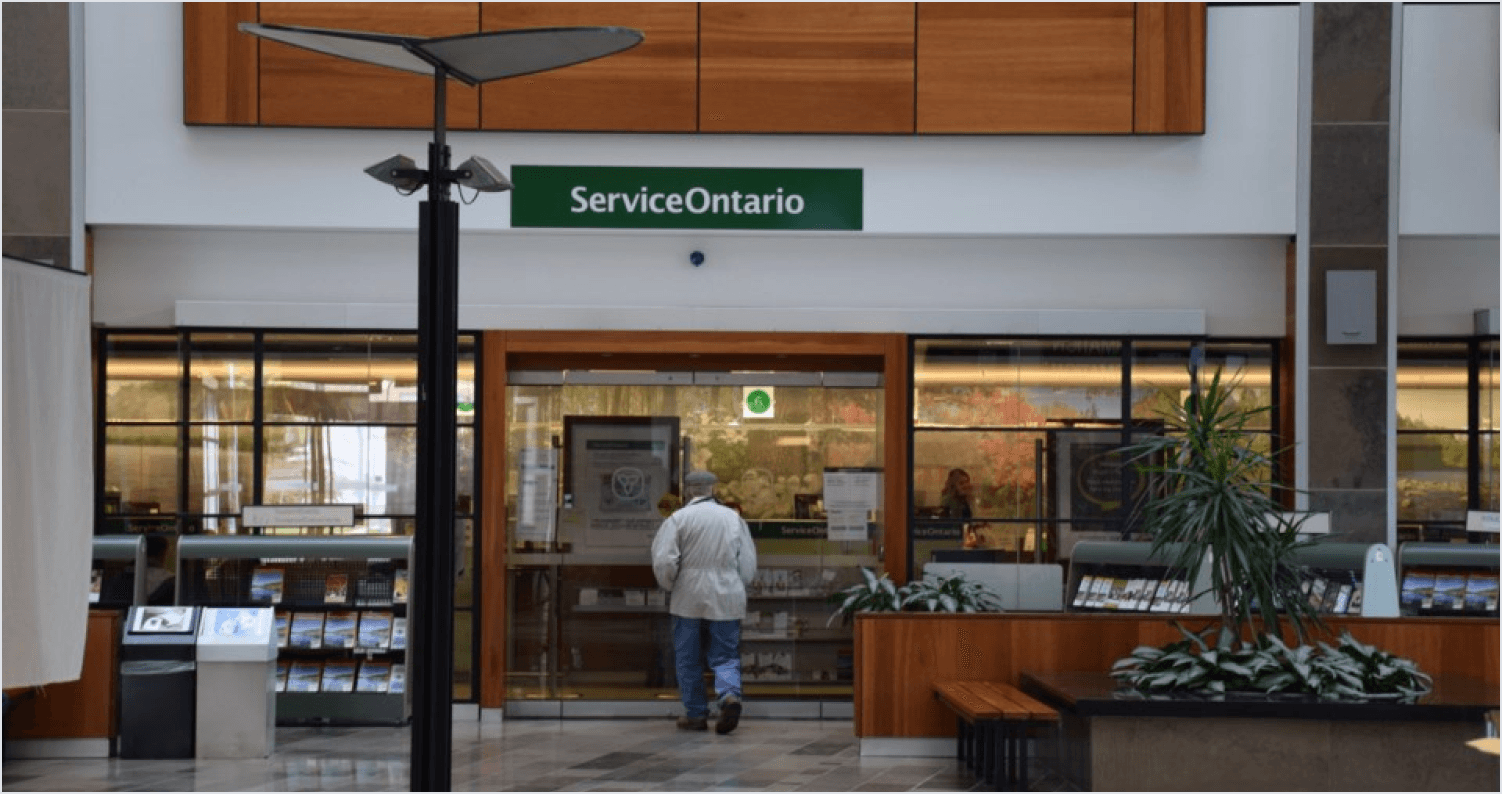
The gap between the service and the system.
ODMS supports the staff who deliver these services, but many steps still rely on manual workarounds and disconnected processes. With limited personnel and resources, even small inefficiencies can add to the team's workload.
The modernization initiative aimed to understand where these challenges occurred and identify opportunities to improve the systems and processes behind service delivery.
Observing the work behind the scenes.
We conducted three site visits to observe how ODS staff delivered services in practice. Rather than looking at the digital system in isolation, we explored the people, processes, tools, and dependencies involved in completing each request.
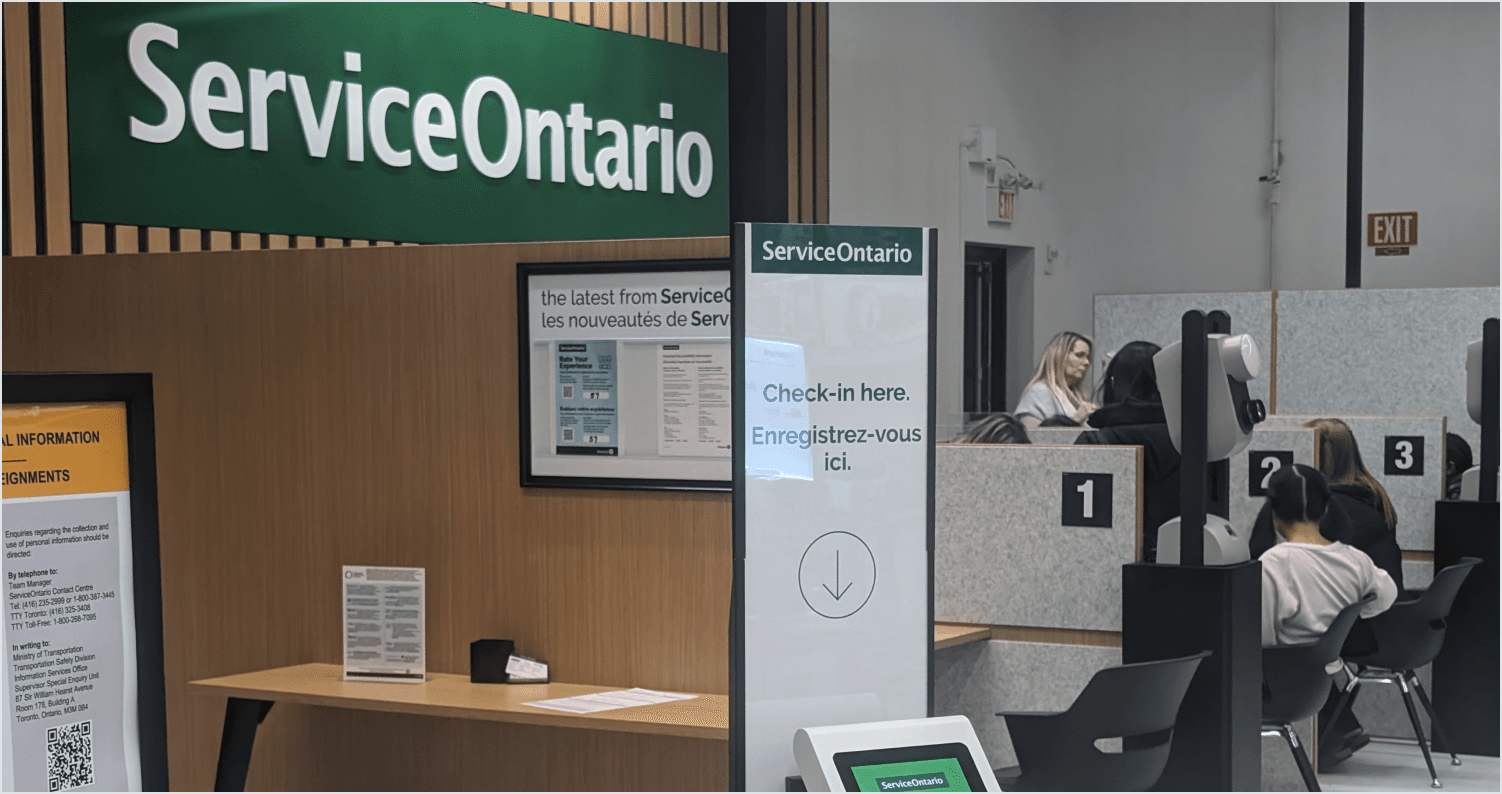
Four services. Four different workflows.
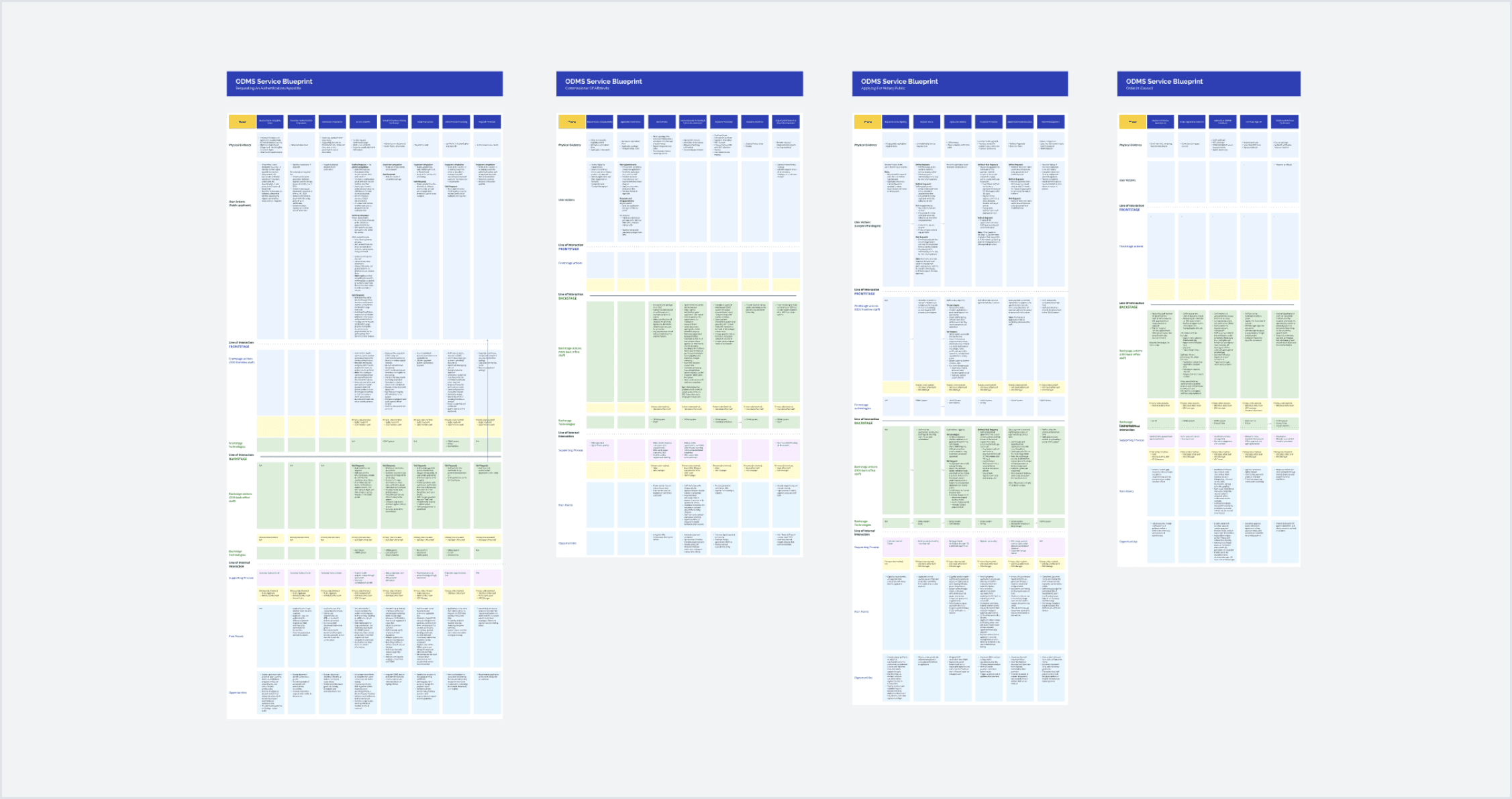
We documented the current state of four services to understand how work moved from request intake to completion.
Service Blueprints
We translated our observations into four current-state service blueprints, mapping staff activities, applicant touchpoints, supporting systems, and handoffs.
This helped us look beyond individual screens to understand how the entire service operated and where friction accumulated.
KEY INSIGHT 1
Finding information took too much work.
Problem
Staff struggled to retrieve records through ODMS and relied on alternative identifiers, spreadsheets, and physical references.
Opportunity
Improve search, filtering, and access to records.
KEY INSIGHT 2
Routine tasks depended on manual workarounds.
Problem
From entering information from paper into the system, to generating certificates and managing mail, many steps required staff to move information between tools.
Opportunity
Reduce duplicate data entry and automate repetitive tasks.
KEY INSIGHT 3
Applicants couldn't always see what was happening.
Problem
Unclear status and limited communication led to follow-up calls, emails, and sometimes duplicate requests.
Opportunity
Improve status visibility, notifications, and guidance.
KEY INSIGHT 4
Staff had to compensate for gaps in the system.
Problem
Staff manually corrected document templates, checked information across sources, and maintained separate tracking methods to keep services moving.
Opportunity
Build better validation, consistency, and workflow support into the digital experience.
IMPACT
A clearer picture of how the service works.
The project established a documented current-state view of four services, creating a foundation for stakeholder recommendations and future modernization work.
KEY TAKEAWAY
The system is bigger than the screen.
This project showed me that improving a digital service means looking beyond the interface. Many of the challenges staff faced came from the processes, disconnected systems, and manual workarounds surrounding ODMS. Mapping these workflows helped us understand where the friction actually came from and where modernization could make the biggest difference.
NEXT PROJECT
Visual Identity & Brand Direction